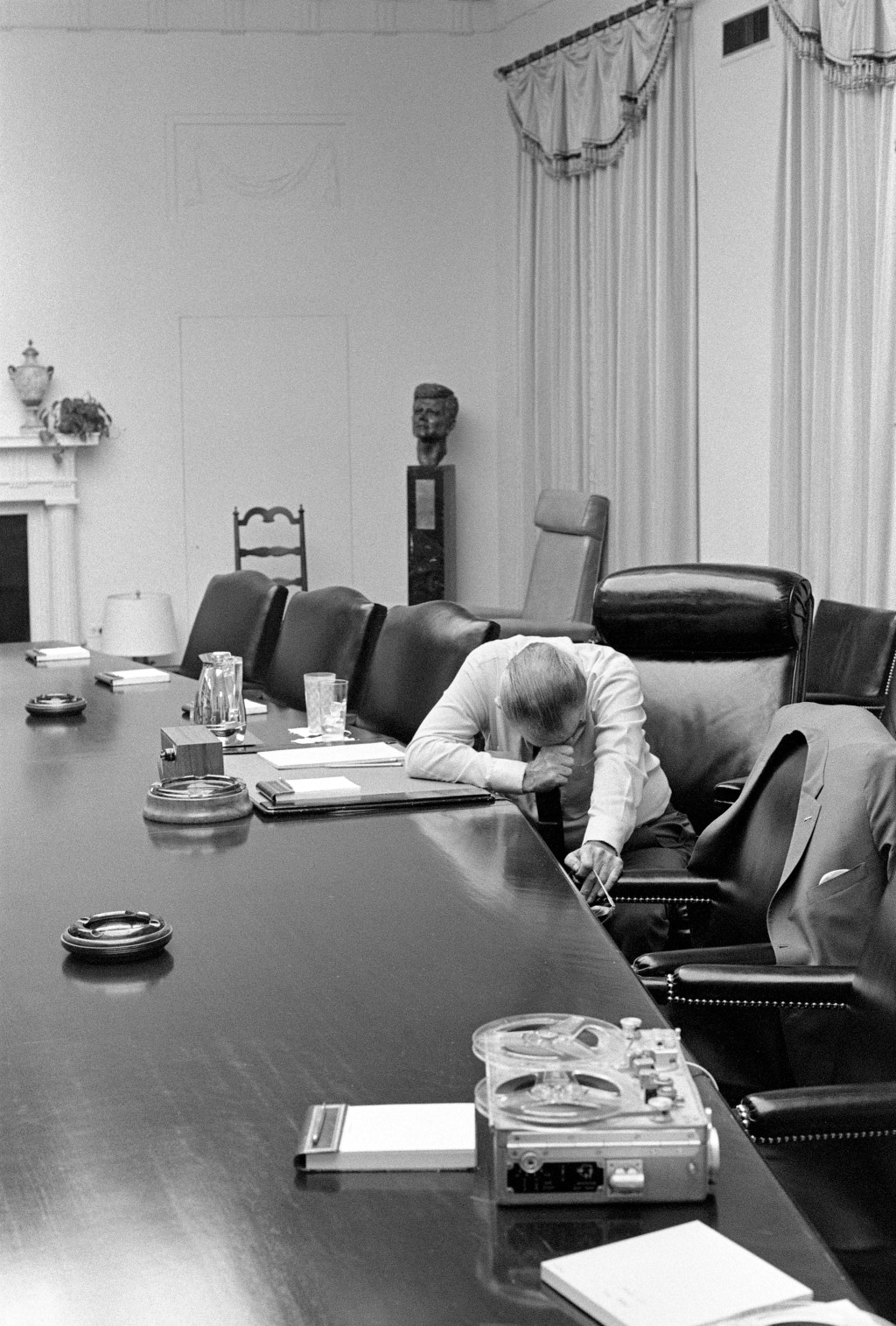
I enjoy learning about behind-the-scenes stories from moments in history. That’s what inspired me to read The Hardest Job in the World: The American Presidency by John Dickerson. It’s well researched and footnoted, and full of the sorts of stories I was hoping for. Dickerson uses those stories to help build a model for understanding the American Presidency and to suggest fixes for how the office can be improved.
Campaigning is not Governing
One of the main problems Dickerson identifies is that the sort of skills which help Presidents get elected aren’t the sort of skills they need to do the actual job.
This fed all my existing biases, so of course I was nodding along the whole time. In my opinion the public are much better equipped to choose legislators than we are to choose executives. It’s one of the advantages a parliamentary system has over a presidential one. In the modern media environment we expect politicians to tell us where they stand on the issues of the day and we decide whether that aligns with our own positions. That’s great for legislators. Once elected they’ll be doing policy work around those issues (or at least that’s what I think they should be doing).
But the media environment and our own temperaments makes it hard to think about what makes a good executive. What’s their theory of leadership? How would they respond to a black swan event? Will they have the emotional intelligence and empathy necessary during a tragedy?
Restraint
My favourite story from Presidential history is the restraint shown by George H.W. Bush during the fall of the Berlin Wall.
If the United States had rubbed Soviet noses in the defeat, Gorbachev might have been pressured to crack down hard in Germany and other countries struggling for their independence. “We were all haunted by the crushing of the uprisings in Hungary in 1956 and in Prague in 1968,” Bush told his diary at the time.
The Hardest Job in the World, p. 313
I’ve always been on the lookout for more stories of Presidential restraint like this. One of my favourite from this book comes from the 1968 campaign.
LBJ knew Nixon was working behind the scenes to sabotage the Paris Peace Accords—he knew it from intelligence reports. Behind closed doors Johnson refused to use this knowledge for campaign purposes. It was one thing for the apparatus of the State to gather information for international relations, it was another thing for him to use information he was privy to as President to give Humphrey and Democrats a political advantage. As LBJ’s Secretary of State Dean Rusk said, “The moment we cross over that divide, we’re in a different kind of society.”
 Red Bearing